Pre Wedding Video
Showing posts with label
Science and Technology News Science and Technology News
.
Show all posts
Showing posts with label
Science and Technology News Science and Technology News
.
Show all posts
Monday, 3 January 2022
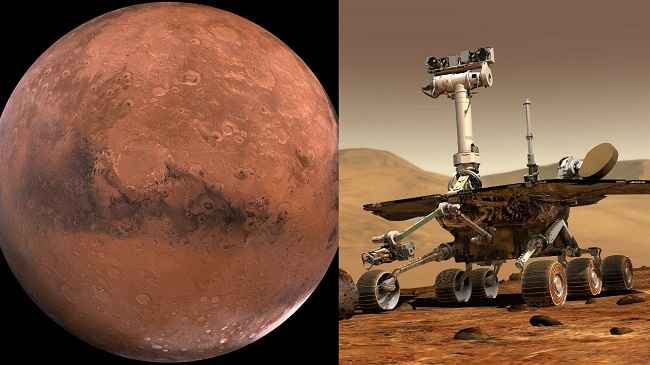
Elon Musk thinks that we could realistically transport humans to Mars in 5 years https://www.digit.in andrew.lu@9dot9.in (Andrew Lu) Planetary space travel has always been an idea that has lingered in the realm of sci-fi. Sure, we may have set foot on the moon, but that was only once and has never been replicated again. But, with billionaires like Elon Musk and Jeff Bezos investing heavily in rocket technology, we could potentially experience space exploration in our lifetimes. In a recent interview on the Lex Friedman podcast, Musk talked about a wide range of topics such as AI, technology etc, but one thing that he stated really struck out. He mentioned that we could, in a best-case scenario, transport actual humans to the surface of Mars in about 5 years! Humans on the surface of Mars in 5 years? We currently have 5 rovers on the surface of Mars. Called Sojourner, Spirit and Opportunity, Curiosity, and Perseverance, the rovers have been collecting data and sending back images of the red planet to earth. Technically, we humans already have a presence on Mars, so a future like the show The Expanse isn’t too far off in the future. As of right now, NASA has scheduled the Artemis 3 mission to the moon to launch in 2025, but with the state of the world, as it is, we’re not sure if the proposed launch will be able to stick to the deadline. But, travelling to the moon and to Mars are two very different undertakings. With the difference being, oh about 225 million km. Let that figure sink in. We currently do not have the financial means of actually sending actual humans to Mars but according to Musk, if there are no delays or mishaps with the building of his Starship variant, we could see humans leave for Mars in the year 2026. But again, this isn’t as simple as strapping astronauts into a spaceship and letting it rip. The coordination, money, engineering, design, management and logistical systems all have to be ready to undertake a literal 225 million kilometre journey. Well, as the old saying goes, if we never try, we’ll never know. Also Read: Space Tourism Just Got It’s Newest Destination: The Moon! https://ift.tt/3FSZCw5 January 04, 2022 at 01:02PM
via Science and Technology News https://ift.tt/3mUftTB
Friday, 3 December 2021
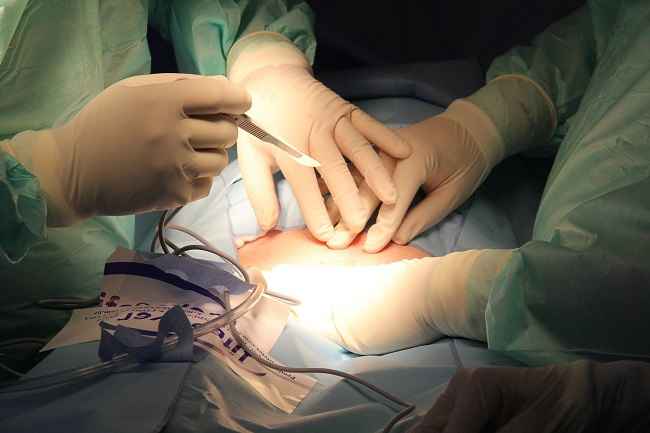
OmniVision unveils the worlds smallest sand-grain sized camera https://www.digit.in news@digit.in (Digit NewsDesk) As the world moves towards smaller and smaller electronics, it looks like OmniVision Technologies Inc may have just hit the ball out of the park with the world’s smallest medical camera. It's actually the size of a grain of sand. The tiny camera measures in at a whopping 0.65 x 0.65 x 1.158mm. The OmniVision OV6948 has also just entered the Guinness Book of Records as the smallest commercially available image sensor in the world. Although it outputs a 40,000-pixel image, the resolution of the camera isn’t anything to write home about. But, for medical professionals who require a closer look at the human body, these cameras are a godsend. What can the OmniVision camera be used for? These cameras can be used in a variety of medical use cases such as helping with delicate surgery and even delivering a more precise diagnosis since doctors are able to get a better look at the problem. It even comes with a 120-degree FOV and an aperture of f/2.8. The camera also produces significantly less heat than its larger counterparts and can be implanted in the human body for a longer period of time. Specialised fields such as brain surgery, Haemotology, neurology etc will definitely benefit from the imagery that this camera produces. In a statement, Aaron Chiang, marketing director at OmniVision stated that, “Previously, procedures in the body’s smallest anatomy were performed either blind or using low-quality images from fiberscopes, as existing cameras were too big and reusable endoscopes were not cost-effective. The OVM6948 wafer-level camera module offers a compact, high-quality solution for disposable guidewires, catheters and endoscopes, which are experiencing growing demand because of their ability to reduce cross-contamination risks, downtime inefficiencies and costs associated with the repairs, preprocedural testing and sterilization of reusable endoscopes. In addition, these compact disposable medical devices can improve patient comfort and shorten recovery time.” Also Read: Scientists have developed the world’s first living robots, bringing us one step closer to a sci-fi future https://ift.tt/3xX5cu7 December 03, 2021 at 05:12PM
via Science and Technology News https://ift.tt/3IesPDb
Thursday, 2 December 2021
Scientists have developed the worlds first living robots, bringing us one step closer to a sci-fi future https://www.digit.in news@digit.in (Digit NewsDesk) As if autonomous robots weren’t enough, scientists have now unveiled the worlds first living robots. What are living robots you ask? Living robots are essentially artificially created organisms that have the ability to reproduce and create more copies of themselves. And no, they’re not just clones that are replicating but are actually reproducing. Researchers have noticed that these living robots can jumpstart a bunch of single cells, building them into an approximation of the parent robot. Within a few days, these ‘offspring’ even start looking like their parents. It’s a breakthrough discovery that has major implications in the medical world and further. What are 'living robots'? Called a Xenobot, the organism is built using organic material and not the usual metal robots that we’re used to seeing in popular media. Although a nanobot swarm is somewhat similar to what these Xenobots can achieve. But, not to fear though, most of these robots will be used to clean microplastics and administer precise medication. These are but just a few uses of these Xenobots. The researchers also stated, “If we knew how to tell collections of cells to do what we wanted them to do, ultimately, that’s regenerative medicine — that’s the solution to traumatic injury, birth defects, cancer, and ageing. All of these different problems are here because we don’t know how to predict and control what groups of cells are going to build. Xenobots are a new platform for teaching us.”. In terms of new medical technology, these Xenobots could change how we view modern medicine in terms of medication delivery and monitoring. It could also speed up healing in wounded patients and such. The applications of this kind of tech are limitless and if anything, the future is going to be rather strange and quite amazing. Also Read: A huge asteroid is moving toward Earth's orbital path https://ift.tt/3Egnb19 December 02, 2021 at 01:01PM
via Science and Technology News https://ift.tt/3ls92q8
Monday, 29 November 2021
A huge asteroid is moving toward Earths orbital path https://www.digit.in editor@digit.in (Kajoli Anand Puri) NASA is known for tracking dangerous space objects to ascertain whether any are heading towards Earth, and whether they have the potential to cause major damage. The agency recently warned that a huge asteroid is moving towards Earth’s orbital path. This asteroid is said to be twice the size of Big Ben, with the potential to cause damage akin to a nuclear explosion. Thankfully, that’s not actually going to happen as the agency says it’s not colliding with Earth. What kinds of damage can an asteroid this size cause? According to NASA, this asteroid has the potential of producing 77 megatons of TNT, and is comparable to some of the largest nuclear explosions tested by man. In fact, NASA believes that the energy an asteroid like this can release will be 1.5 times that of the biggest nuclear weapon ever tested, Tsar Bomba. The Tsar Bomba was a bomb tested by the Russians, and the force was 3,333 times that of the atom bomb dropped on Hiroshima during the Second World War. So, you can imagine the level of damage that this asteroid can cause if it hits Earth. How likely is it for asteroids to hit Earth? Asteroids can hit Earth in the future, if they happen to be on the right collision course. Sometimes, smaller asteroids break into smaller pieces when they enter the Earth’s atmosphere (this happens because of the friction with the air) and hardly make an impact when they hit earth. Some dissolve entirely. However, the likelihood of a large asteroid hitting earth and causing widespread damage is not something NASA can rule out. It is believed that a large asteroid hit Earth millions of years ago, killing dinosaurs. NASA is preparing for the eventuality. One of the experiments the agency is working on is called the Double Asteroid Redirection Test (DART). The idea is to crash a spacecraft into an asteroid with enough force to knock it off its path. Also Read: NASA releases awe-inspiring image of a spiral galaxy taken by the Hubble Telescope https://ift.tt/3EbnIBu November 29, 2021 at 05:59PM
via Science and Technology News https://ift.tt/3E47kCL
Indian Parliament summons Facebook India officials to discuss citizens rights and Womens safety https://www.digit.in editor@digit.in (Kajoli Anand Puri) Last year, former Facebook data scientist, Sophie Zhang, published a memo detailing the way Facebook is used to influence global politics. She spoke about sophisticated systems in place in India that were used to try and influence the 2020 Delhi Elections, along with similar systems in other developing countries throughout the world. Now, on the heels of her memo and a recent controversy surrounding Facebook’s policies and impact on politics, the Parliament has summoned officials representing Facebook India to discuss citizens’ rights and womens’ safety. The Parliamentary Standing Committee on Information Technology (IT) will be held on November 29, with Congress leader Shashi Tharoor appointed as the Chairman of the same. "To hear the views of representatives Of Facebook India on the subject safeguarding citizens rights and prevention of misuse of social/online news media platforms including special emphasis on women security in the digital space," the committee agenda read. Treating Social Media as Publishers Currently, our laws treat social media platforms as intermediaries of content, and this approach has not done much to regulate the kind of content that is published and distributed. With hate speech and fake news being credited for countless communals incidents across the country, the Parliamentary Panel set up last week to examine the ramifications of such platforms concluded that they need a separate regulatory body, similar to the Press Council of India. Doing so will make the platforms more liable for user-generated content - something that companies like Facebook and Twitter refuse to take any responsibility for. Additionally, with more and more consumers across tier-2 and tier-3 cities adopting smartphones and setting up social media accounts, data protection itself has become a widespread concern for the government. With this in mind, the Personal Data Protection Bill, 2019, may be revised to protect non-personal data from being misused by such companies. What about the Metaverse? While the Indian government is moving in the right direction as far as protecting its citizens goes, there is certainly a much larger threat on the horizon - the Metaverse. With people entering virtual realities and building lives there, the data protection and privacy laws of today may end up holding no meaning. Imagine curating actual experiences that sway public opinion, transforming people from subscribers to one political ideology to completely opposing ones. Now imagine this happening so subtly, that you barely have time to reassess your values. If companies like Meta are to make virtual worlds accessible to Indian citizens, they need to offer transparency regarding how they will use customer data. Also Read: Facebook to Protect Famous People, While Stomping on the Masses https://ift.tt/3ErKgh3 November 29, 2021 at 05:58PM
via Science and Technology News https://ift.tt/3xwNJIK
Saturday, 25 September 2021
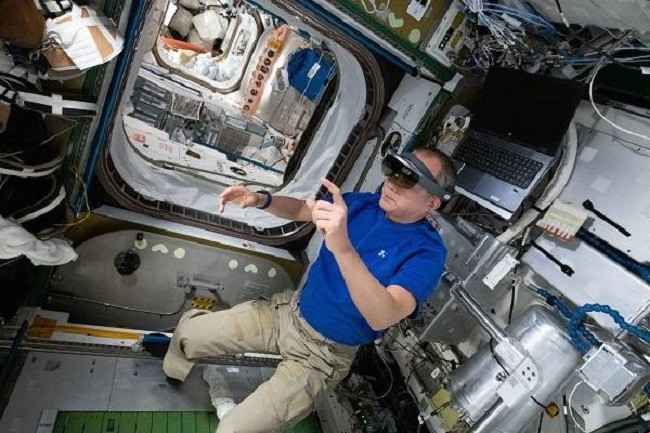
NASA to equip ISS crew with Augmented and Virtual Reality tech to help with repairs and maintenance in space https://www.digit.in news@digit.in (Digit NewsDesk) Augmented Reality is still in its nascent stages of development, but even at such an early stage, the applications and uses of this technology are moving beyond even the boundaries of the Earth. In a new report on the official NASA website, the space agency has stated that the astronauts aboard the International Space Station could soon be using AR to actually repair and perform maintenance on the space station. This will essentially bypass the need for astronauts to be in constant communication with ground control, freeing them up to focus on the task at hand. From what we can see, the applications of this kind of technology are boundless as maintenance is a key component of space travel since you’re essentially stuck in the cold darkness of space with little to no real resources. So, keeping your spacecraft intact and function will be of utmost importance. Without the need for communication with ground control, astronauts will be able to make decisive and necessary decisions when it comes to repair or maintenance work. NASA's T2 Augmented Reality project will fit the astronaut with a pair or AR glasses that will display precise instructions on how to best navigate the problem. It will display 3D cues and could even display blueprints, giving astronauts a deeper understanding of the problem. In fact, on the official NASA blog, you can actually read all about how NASA is looking at taking AR and VR tech forward on the ISS and how the agency uses it in various ways. With space travel being a major leap for mankind, we can only hope that these new technologies ease our transition to a space-faring race of explorers. But, for now, we have to live vicariously through the brave men and women on the ISS. Also Read: NASA releases awe-inspiring image of a spiral galaxy taken by the Hubble Telescope https://ift.tt/3udbBzi September 25, 2021 at 03:54PM
via Science and Technology News https://ift.tt/39Bnzt9
Older Posts
Home
Subscribe to:
Posts (Atom)
16 Tips for Beautiful Travel Portrait Photography
How to Read (and Use) Histograms for Beautiful Exposures
The post How to Read (and Use) Histograms for Beautiful Exposures appeared first on Digital Photography School . It was authored by Darlene...
Retouch4me Review: Time-Saving Plugins for Portrait Retouching
The post Retouch4me Review: Time-Saving Plugins for Portrait Retouching appeared first on Digital Photography School . It was authored by S...
How to Use a Snoot in Photography: The Complete Guide
The post How to Use a Snoot in Photography: The Complete Guide appeared first on Digital Photography School . It was authored by Simon Bond...